
Confront the dark parts of yourself, and work to banish them with illumination and forgiveness. Your willingness to wrestle with your demons will cause your angels to sing. - August Wilson
Directing
I’ve had the privilege to study with an array of seasoned professionals throughout my time at university. From guest directors visiting from across the country to professors who are actively educating and working in the field, I’ve learned the most about myself by staying curious, looking under the rug, and approaching new and contemporary work with genuine interest and care. That mindset has helped me create spaces where people feel safe taking creative risks. I’ve always been drawn to play development, and that pull has shaped how I show up in every room. I’m especially interested in why risk matters, approaching it with curiosity, and using it to deepen storytelling and support the creative growth of the ensemble.
What am I most interested in right now?
Harm reduction and its impact in arts spaces surrounded by rural conservatism, anti-fat bias, comedy-horror, occultism, musicals by singer-songwriters breaking free from industry norms, absurdism, puppetry, found space, and reclaiming golden age musical theatre with a queer lens.
-
Paradise Lost (Director, Kennedy Center ACTF), Pareidolia (Director, The Menagerie Theatre Company), What the Gods Gave Me (Assistant Director, Dir. Kayla Adams), Fall 2022 Season (Assistant Production Manager, Prod. Savannah LeCornu), Men on Boats (Assistant Director, Dir. Rich Brown), Moving Day (Assistant Director, Dir. Avionna Rodriguez Brown), In Your Eyes (Assistant Director, Dir. Avionna Rodriguez Brown), Cabaret (Assistant Director, Dir. Jim Lortz).
Below, I have featured some images from the work I have assistant-directed and dramaturged.

what the Gods gave me by Eryn Mcvay, Western Washington University (2023), Sattva Photo


Men on Boats by Jaclyn Backhaus, Western Washington University (2022), Sattva Photo
Cabaret, Western Washington University (2021)
Dramaturgy

Edith Can Shoot Things & Hit Them, Directed by MJ Dizon
Excerpt from Dramaturgical Packet:
"When I write about ethnicity, I try to do it from the inside. I don’t like writing about ethnicity as a thing to display to other people. I think it’s more interesting if the audience steps into your shoes."
—A. Rey Pamatmat
Dear Reader,
In the last three months, we’ve witnessed the tangible impact of current U.S. administrative decisions surrounding immigration—tightened border policies, heightened surveillance, and legal uncertainty for mixed-status families. These policy shifts reverberate through communities much like Kenny and Edith’s, where access to safety, stability, and opportunity is already tenuous. Edith Can Shoot Things and Hit Them (ECSTAHM) reminds us that behind every political headline are real families navigating impossible choices, and young people doing their best to grow up in systems not built for them.
It is not a question of whether this piece of media is relevant or if the Bellingham community is “ready” for it. This play extends an invitation, and a challenge, to confront the realities already present in our neighborhoods: isolation, identity, survival, and the quiet resilience of queer youth and immigrant families.
Pamatmat’s quote illuminates much about ECSTAHM. It offers insight into how crucial it is to understand the characters from within their lived experiences. Through my dramaturgy research, I hope to offer you an entry point into that understanding.
Lastly, this guide is not the final word, but rather a companion for you to refer back to as you immerse yourself in the world of the play. It is a living, breathing work; your interpretation will only expand and enrich the ideas presented here.
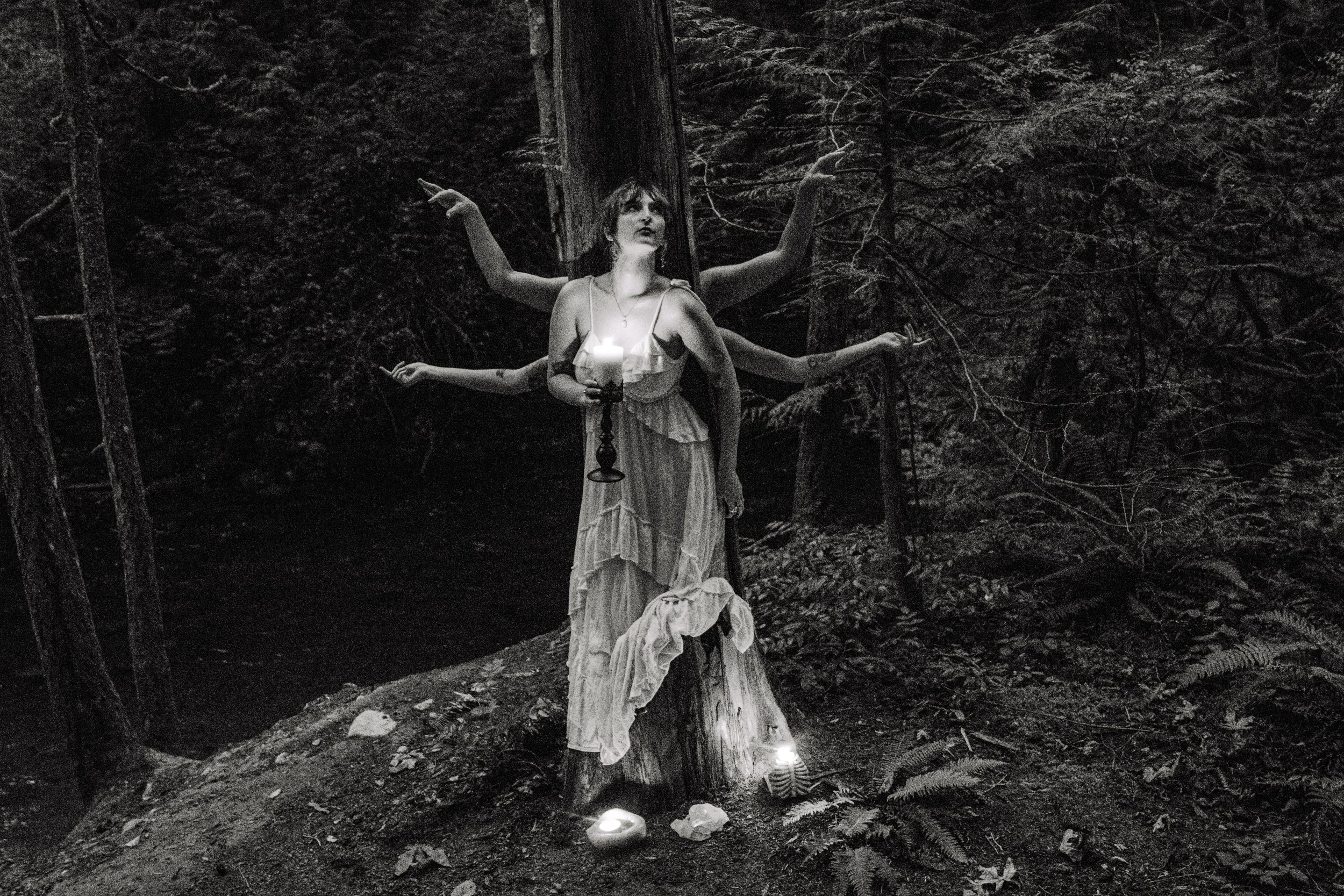
In the Shadow of Lilith: Reclaiming Rage, Reclaiming Power by Madison LeFever
This analysis explores the evolving symbolism of Lilith, from a demon of seduction to a representation of divine feminine rage and autonomy. Drawing from what the Gods gave me by Eryn McVay, this excerpt examines a feminine family that relies on Lilith's guidance to maintain their lineage through ritualistic practices, including a male sacrifice to preserve their prosperity.
The play highlights the tension between inherited traditions and the desire for personal autonomy. Ultimately, the piece critiques patriarchal structures, examining how divine feminine rage, when channeled as resistance, becomes a tool for survival and liberation.